

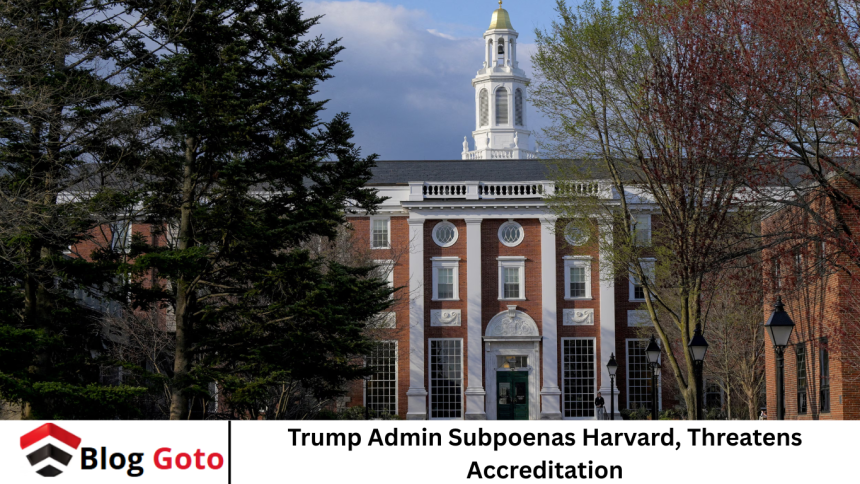
In a bold and controversial move, the Trump administration issued subpoenas to Harvard University, raising alarms across higher education. The Department of Education (DOE) and Department of Justice (DOJ), under the leadership of then-President Donald Trump, escalated its probe into Harvard’s alleged civil rights violations and diversity policies.
Federal officials warned that if Harvard failed to comply with the requests, its accreditation could be at risk — a threat that sent shockwaves through academic and legal circles alike. The action, framed as a battle for transparency and equal opportunity, quickly ignited debates over academic freedom, affirmative action, and federal overreach.
This article provides a detailed breakdown of the incident, the Trump administration’s motives, legal implications, and the broader cultural war engulfing American higher education.
More Read: How Linda Yaccarino Went from Leading X to Leaving It in Just Two Years
The Backstory: Why the Trump Administration Targeted Harvard
The conflict between Harvard and the Trump administration didn’t emerge overnight. It was the culmination of years of legal tension, public disagreements over affirmative action, and growing federal scrutiny of elite institutions’ admissions practices.
At the heart of the controversy was the Trump administration’s belief that Harvard and similar Ivy League institutions were violating civil rights laws by allegedly discriminating against Asian American applicants in their admissions process.
In 2018, the DOJ launched an investigation into Harvard’s admissions practices, siding with Students for Fair Admissions (SFFA), a group that sued the university over its race-conscious admissions policies. Though Harvard won in lower courts, the Trump DOJ remained persistent, alleging lack of transparency and potential civil rights infractions.
The Subpoenas and Threats
In October 2020, just weeks before the presidential election, the DOE issued subpoenas demanding Harvard hand over a broad set of documents. These included records related to the university’s handling of sexual harassment complaints under Title IX, its diversity training programs, and admissions policies.
The administration warned that failure to fully comply could result in serious consequences — including the loss of Harvard’s accreditation, a move that would effectively strip it of federal funding and devastate its academic credibility.
The Trump administration’s Assistant Secretary for Civil Rights, Kenneth Marcus, emphasized, “We don’t enjoy issuing subpoenas, but sometimes we have to do things the hard way. Schools must follow the law.”
Federal Oversight and Political Motivation
Critics of the Trump administration argued that the subpoenas were not just about legal compliance, but politically motivated attacks on liberal institutions. Harvard, often seen as a bastion of progressive thought, had long been a punching bag for conservatives who viewed its diversity initiatives as discriminatory and elitist.
The administration’s moves were interpreted by many as part of a broader strategy to rally its political base by challenging what it perceived as leftist strongholds. By taking on Harvard, Trump’s team was able to signal its commitment to “equal opportunity” while also fighting perceived political indoctrination on campuses.
However, defenders of the administration said it was merely enforcing federal laws and ensuring that no institution — no matter how prestigious — is above scrutiny.
Harvard’s Response
In a public statement, the school defended its practices and reiterated its commitment to diversity, inclusion, and compliance with federal laws. It also accused the administration of overstepping legal boundaries and using government power to intimidate academic institutions.
Legal scholars from across the country rallied to Harvard’s defense, warning that such threats from the federal government undermined academic independence and set a dangerous precedent. Harvard University pushed back strongly against the Trump administration’s actions.
Harvard stated that it had already provided thousands of pages of documents and cooperated in good faith. However, the escalation via subpoenas marked a new level of tension between the federal government and the Ivy League school.
The Role of Accreditation
Why was the threat to Harvard’s accreditation so serious? Accreditation is a critical component for any U.S. educational institution. It determines whether a university meets certain standards and is eligible to receive federal funds — including student financial aid and research grants.
Losing accreditation would not only damage Harvard’s reputation but also affect its students’ ability to receive government-backed loans and its faculty’s access to federal research dollars.
The DOE’s warning that Harvard could lose this status was widely seen as an extreme step, potentially weaponizing the federal government’s regulatory power for political purposes.
Broader Implications for Higher Education
This episode between the Trump administration and Harvard is emblematic of larger tensions within American society — particularly around race, privilege, and the role of higher education.
By challenging Harvard, the administration raised key questions:
- Should elite institutions be allowed to use race as a factor in admissions?
- How transparent must universities be when investigated by the government?
- What role should the federal government play in shaping academic culture?
For colleges and universities nationwide, the Harvard case served as a warning. If even Harvard could face subpoenas and accreditation threats, no institution was immune.
Legal and Political Fallout
The legal battle surrounding Harvard’s admissions policies continued to make its way through the courts. Although the Supreme Court did not immediately take up the case, many believed that a conservative majority would eventually overturn existing affirmative action precedents.
Meanwhile, President Joe Biden’s administration reversed course on many of Trump’s education policies. Investigations were halted, and a more collaborative tone was struck between the Department of Education and universities.
Still, the legacy of the Trump-era push against elite academia remains. The issues raised continue to resonate, especially in political debates over “woke” education, critical race theory, and the value of diversity initiatives.
Public Reaction
The public response was deeply polarized. Supporters of the Trump administration cheered the move, arguing that elite universities needed to be held accountable for what they saw as unfair, ideologically driven practices.
On the other hand, critics saw the move as a cynical attempt to silence institutions that promote progressive values and social justice. They feared the chilling effect such federal interventions could have on academic freedom and civil rights protections.
Students, faculty, alumni, and advocacy groups across the country issued statements of support for Harvard, urging transparency but warning against government overreach.
Frequently Asked Question
Why did the Trump administration issue subpoenas to Harvard?
The administration claimed Harvard was violating civil rights laws, particularly in its admissions practices, and wasn’t cooperating sufficiently with federal investigations into discrimination and Title IX compliance.
What were the subpoenas requesting?
The subpoenas demanded records related to admissions processes, sexual harassment complaints under Title IX, and diversity training materials, among other documentation.
Could Harvard really lose its accreditation?
Technically, yes. The Department of Education can recommend revoking a university’s accreditation if it fails to meet federal standards. However, such actions are rare and would face significant legal and political challenges.
How did Harvard respond to the subpoenas?
Harvard defended its actions, said it had already cooperated, and condemned the Trump administration’s tactics as heavy-handed and politically motivated.
Was this related to the affirmative action lawsuit against Harvard?
Yes. The Trump administration’s DOJ supported Students for Fair Admissions in their lawsuit alleging that Harvard discriminated against Asian American applicants.
Did the Biden administration continue the investigation?
No. After taking office, President Biden’s administration reversed many of the Trump-era education policies, and the aggressive investigations into universities like Harvard were dropped or significantly scaled back.
What does this mean for other universities?
It highlights how federal oversight can be influenced by political ideology. Universities may need to be more transparent and legally prepared, regardless of the administration in power.
Conclusion
The Trump administration’s decision to subpoena Harvard and threaten its accreditation was one of the most aggressive federal interventions into higher education in recent memory. While framed as a necessary measure to enforce civil rights laws, it was widely seen as a politically charged move targeting a liberal institution. The episode illustrates the deepening divide over education, race, and federal power in America. For universities, it serves as both a cautionary tale and a call to defend their autonomy.