

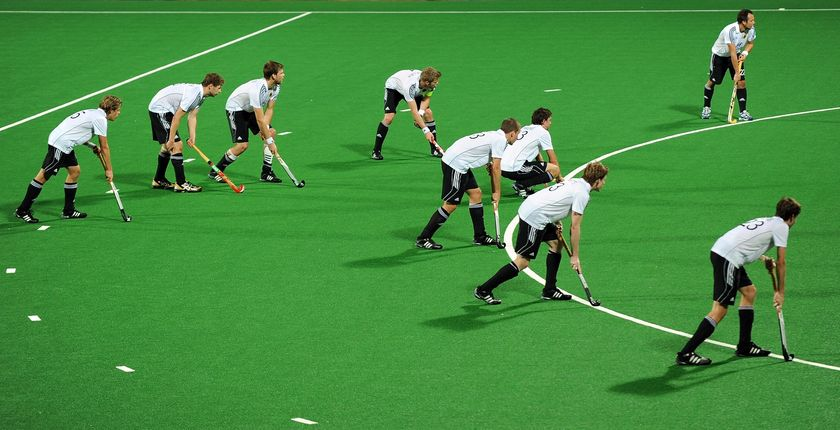
Field hockey is a dynamic team sport that blends speed, precision, and strategy on a grass or artificial turf field. Many bets on this exciting sport can always be found at the १xBet नेपाल platform.
While individual skills like dribbling, passing, and shooting are essential, understanding the tactical side of the game is just as important for success at higher levels. Basically, the tactical aspects of field hockey shape how teams do 3 things:
- attack;
- defend;
- and control the game.
At its foundation, field hockey tactics revolve around creating numerical superiority in key areas of the field. Much like in football, teams try to position more players than the opposition in the spaces where the ball is being played. When a team has possession, this superiority helps in 3 ways: maintain control, make effective passes, and open up space for shots on goal. When out of possession, it allows players to isolate opponents and cut off passing lanes to win back the ball. Speaking about football, at the नेपाल १xBet platform punters will also find the best wagers on this discipline too.
A sport with a wide range of strategic elements
Field hockey also emphasizes structured formations that support both offensive and defensive tactics. A typical formation might resemble a variation of a 3-4-3 or 4-3-3 system. Here defenders, midfielders, and forwards have defined roles but must frequently rotate positions based on the flow of play. Players without the ball are expected to reposition themselves to support teammates, create passing options, and cover defensive space.
In attacking phases, teams often use 2 elements to break through defensive lines: triangular passing patterns and quick combinations. These patterns allow players to move the ball with short, sharp passes and maintain forward momentum. Making effective use of field width is key: spreading play to the flanks can stretch the opponent’s defense, creating opportunities to penetrate the shooting circle.
Defensively, tactical emphasis lies in 2 elements: positioning and pressure. Teams may adopt zonal or man-to-man marking systems to restrict opponents’ space and force turnovers. When a team loses possession, players must transition quickly from offense to defense. This is a tactic known as pressing, and it is used to prevent fast counterattacks and regain control before the opposition can exploit gaps.
Finally, another strategic aspect is managing set plays, such as penalty corners, which are significant goal-scoring opportunities. Teams often prepare specific routines or plays where coordinated movement and shot techniques like the drag flick are used to maximize the chance of scoring.