

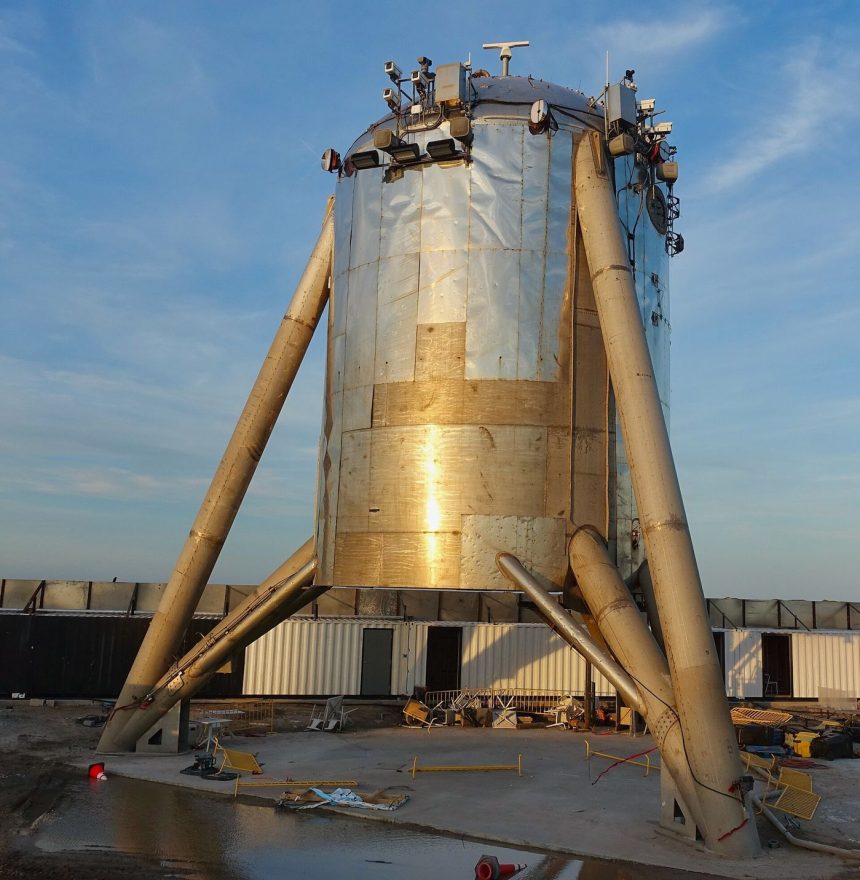
SpaceX has caught its Starship spacecraft out of the sky for the first time, completing a milestone in its drive to build a fully reusable rocket. The 124-metre Starship lifted off from Starbase in Texas on 13 November 2026 for its 15th test flight, the most ambitious yet. Minutes after liftoff the Super Heavy booster developed a problem on its way back to the pad, forcing SpaceX to divert it to the Gulf of Mexico, where it exploded. The Starship upper stage pressed on into orbit, deployed 26 next-generation Starlink V3 satellites, and circled Earth 14 times over about 22 hours. On 14 November it fired its engines, flipped vertical and descended into the arms of the launch tower, which caught the 52-metre spacecraft in midair.
What the Evidence Shows
The flight was designed as a first attempt at a double catch, recovering both the booster and the ship at the launch tower, and only half of that plan succeeded. SpaceX said the booster received a fuel shortage warning during its return, which forced the catch attempt to be cancelled. The ship catch matters more for the long term, because it proves a spacecraft can return from orbit and be recovered without landing legs or a splashdown in the ocean. SpaceX now builds a new Starship about every two weeks and a booster about every four weeks, and it plans to start launching Starships from Florida within a few months. The company sees the vehicle as the workhorse for its Starlink business, for returning people to the Moon and eventually for settling on Mars. Reporting and analysis from sources such as Wired track the same developments, and specialists following Starship Flight 15 say the direction is now consistent across independent lines of evidence.
The Wider Context
The wider context is an industry learning to ship capability and restraint together. Products built around Starship Flight 15 now launch with safety evaluations, usage data and rollback plans as standard, because enterprise buyers and regulators ask for them in the first meeting. Companies that treated those questions as friction are discovering they have become the purchase criteria.
What Happens Next
What happens next for Starship Flight 15 depends less on another breakthrough than on the unglamorous work of reliability, pricing and support. The buyers evaluating it now are not enthusiasts; they are operators with budgets and auditors, and their checklists will decide the timeline. On the evidence of the current pilots, the technology has earned the right to be judged by them. You can follow related developments in our coverage of technology.
None of this will be settled by a single announcement, study or product launch. The pattern to watch is accumulation: independent confirmations, honest reporting of failures and steady improvement in the underlying numbers. Readers who follow those signals, rather than the loudest claim of the week, will understand this subject better than most of the commentary surrounding it suggests is possible.