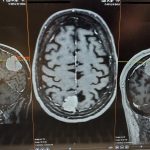

A lung nodule is a small finding with an outsized shadow. Most are harmless scars or granulomas; a few are early lung cancers, when treatment can still cure. Telling the difference – reliably, for thousands of patients a year, without losing anyone in the system – is an organisational problem as much as a medical one. The American College of Chest Physicians (CHEST) has now published a framework that treats it as such: six steps for building a lung nodule program that carries each patient from detection all the way to diagnosis or safe discharge.
The timing is no accident. Lung cancer screening with low-dose CT is expanding, and modern scanners detect incidental nodules on scans ordered for entirely different reasons – trauma, cardiac workups, abdominal pain. Health systems are awash in findings their workflows were never designed to manage. CHEST’s framework is the profession’s attempt to build the workflow deliberately rather than improvise it patient by patient.
From Finding to System
The framework’s first insight is that a nodule program is a system, not a clinic slot. Its steps span identification and registry tracking, standardised risk assessment, shared decision-making with patients, selection of the right diagnostic pathway, timely definitive treatment when cancer is found, and structured surveillance for nodules being watched. Each step has an owner, a timeframe and a measure – the three things ad hoc care most often lacks.
Registries do the heavy lifting. When every detected nodule enters a tracked list with a next action and a due date, the most common failure in nodule care – the follow-up scan that simply never happens – becomes visible and therefore fixable. Programmes that have adopted registry discipline report dramatically fewer lost patients, which is why CHEST places tracking infrastructure at the framework’s core rather than its periphery. The framework is published via the journal CHEST.
Risk, Biomarkers and Better Decisions
Not every nodule deserves the same response, and the framework’s middle steps are about calibration. Clinical risk models combine nodule features – size, edges, growth – with patient factors like smoking history to sort findings into watch, test further, or act now. Into that process, the framework integrates validated biomarker testing, including blood-based assays of the kind developed by Biodesix, which estimate malignancy probability and can tip borderline cases toward surveillance or toward biopsy with better information.
The point of such tests is not to replace clinical judgement but to reduce its two characteristic errors: biopsying benign nodules, with real procedural risk, and watching malignant ones while they grow. A program that measures its own rates of both errors – and uses every validated tool to shrink them – is the framework’s definition of quality. Shared decision-making runs through the same steps: patients told clearly what their risk estimate means make better partners in surveillance plans that may stretch over two years of interval scans.
Why This Matters Beyond Pulmonology
Lung nodule care is a template for a much larger problem in modern medicine: the incidental finding. Advanced imaging generates more findings than the follow-up systems of most hospitals can responsibly absorb, across organs from thyroid to adrenal glands. The organisational machinery CHEST describes – registries, risk stratification, accountable ownership, measured outcomes – generalises to all of them.
There is an equity dimension as well. Without organised programs, follow-up quality tracks patients’ own resources: the persistent and well-insured get their scans; everyone else gets lost. A registry does not care who your insurer is. Frameworks that build tracking in from the start are, quietly, among the more effective health-equity interventions available. Patient information on lung cancer screening is available from the American Cancer Society.
Building the Program With Finite Resources
Not every hospital can hire a dedicated nodule team on day one, and the framework’s practical value lies partly in its scalability. A small programme might begin with the two highest-yield components – a tracking registry and a weekly multidisciplinary review, even a virtual one – and add navigation, biomarker pathways and outcome dashboards as volume justifies them. The sequence matters less than the commitment to measure from the start, because a programme that knows its lost-to-follow-up rate can argue for resources with evidence rather than anecdotes.
Technology is quietly lowering the cost of doing this well. Natural-language tools can now flag nodule mentions buried in radiology reports written for other purposes, closing the detection gap where many patients were previously lost before a programme ever knew they existed. Integrated into a CHEST-style framework – with human accountability wrapped around the automation – those tools turn the six steps from an aspiration for large academic centres into a realistic standard for community hospitals, where most nodules are actually found.
For patients navigating a nodule finding today, the framework offers a usable definition of good care to compare against their own experience: a clear explanation of the finding and its likely meaning, a risk estimate rather than a shrug, a scheduled next step with a date attached, and a named team responsible for the follow-through. Where any of those elements is missing, asking for it is not being difficult – it is requesting the standard of care the profession has now written down for itself. That, in the end, may be the framework’s most immediate benefit of all.
The Standard Is Now Written Down
Before this framework, a hospital’s nodule care was whatever its local champions made it. After it, there is a reference standard: six steps, defined components, measurable outcomes. Administrators can budget against it, clinicians can build to it, and patients can ask the simplest quality question in medicine – do you have a program, and does it follow the framework?
Most lung nodules will still turn out to be nothing. The framework’s promise is narrower and more important: that the few which are something will be found in time, every time, by a system designed not to drop them.