

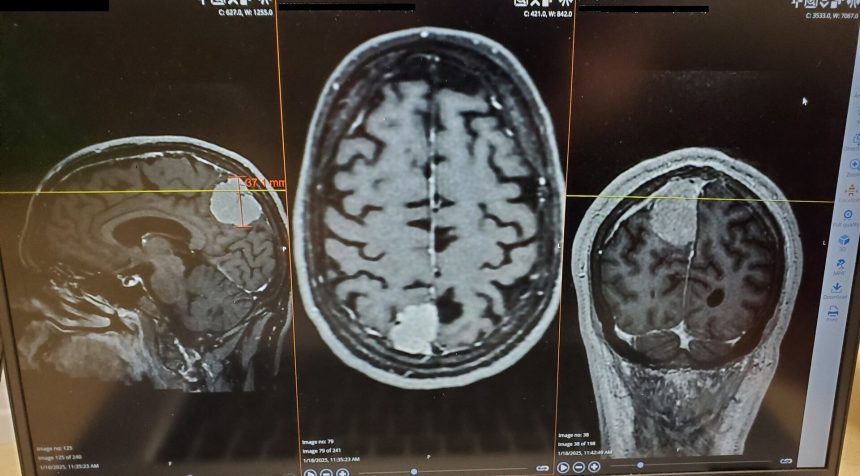
The human brain is evolution’s masterpiece and, on closer inspection, a bundle of compromises held together by optimism. Scientists who study how our brains evolved argue that the very expansions that made us intelligent also set the organ up for failure — predisposing us to schizophrenia, Alzheimer’s, chronic anxiety and the slow cognitive dimming of old age. We did not evolve a brain designed for health. We evolved one designed to reproduce, fast, under conditions nothing like the modern world.
Start with the trade-offs. The dramatic expansion of the cortex, especially regions supporting language, planning and social cognition, came at enormous metabolic cost: the brain burns about a fifth of our energy at rest. The same late-developing, highly connected networks that give us abstract thought are the last to mature and the first to falter — a pattern neuroscientists call “last in, first out.” Disorders map uncannily onto our newest circuitry, as if evolution shipped powerful features without the maintenance budget. Overviews of this research appear through Scientific American’s coverage of brain evolution.
Built for a Different World
Evolution optimised the brain for short lives in small groups under constant threat. The stress system that saved our ancestors from predators now fires at inbox notifications and mortgage payments, and its chronic activation damages the hippocampus — the memory centre — over years. Our reward circuitry, tuned for scarce calories and rare social wins, is defenceless against engineered abundance: ultra-processed food, infinite feeds, variable-reward apps. Even our gift for mental time travel cuts both ways, generating the rumination and dread that fuel anxiety and depression.
Longevity itself is an evolutionary afterthought. Selection’s grip weakens after reproductive age, so the ageing brain accumulates amyloid, tangles and vascular damage largely unopposed — the substrate of dementia. Our health features often return to this mismatch: a brilliant organ, out of warranty, in an environment it was never built for.
Living Well With a Compromised Masterpiece
The mismatch framing is not fatalism; it is a user manual. If the brain’s failure modes are predictable consequences of its design, then the countermeasures follow from the diagnosis: sleep to clear metabolic waste, exercise to feed the hippocampus the growth factors it evolved to expect, social connection to satisfy circuitry built for tribes, and novelty to keep plastic networks plastic. Research programmes highlighted by Nature’s neuroscience coverage increasingly treat Alzheimer’s and depression as systems problems of an overextended organ, not single broken parts.
There is something almost consoling in the science. The brain was never going to be perfect; it was going to be good enough, early enough, in a harder world. Understanding exactly how it was set up to fail may be the most human use of the intelligence it gave us.
The Trade-Off We Would Not Undo
It is worth ending on the obvious paradox: nobody offered the alternative would trade this brain away. The same restless, pattern-hungry, future-simulating organ that generates anxiety also generates science, art and the very research that diagnosed its flaws. Its failure modes are inseparable from its capabilities — rumination is planning with the sign flipped, vigilance is attention that will not switch off, and the plasticity that lets trauma scar us is the plasticity that lets learning heal us. Evolution did not design a defective product; it shipped a high-performance one under brutal constraints, on a deadline, for an environment that has since vanished. Our task is maintenance in a world the warranty never contemplated. That framing turns out to be the most practical one the science offers — not despair at a broken machine, but respect for a magnificent compromise, and a clear list of the services it needs to keep running.