

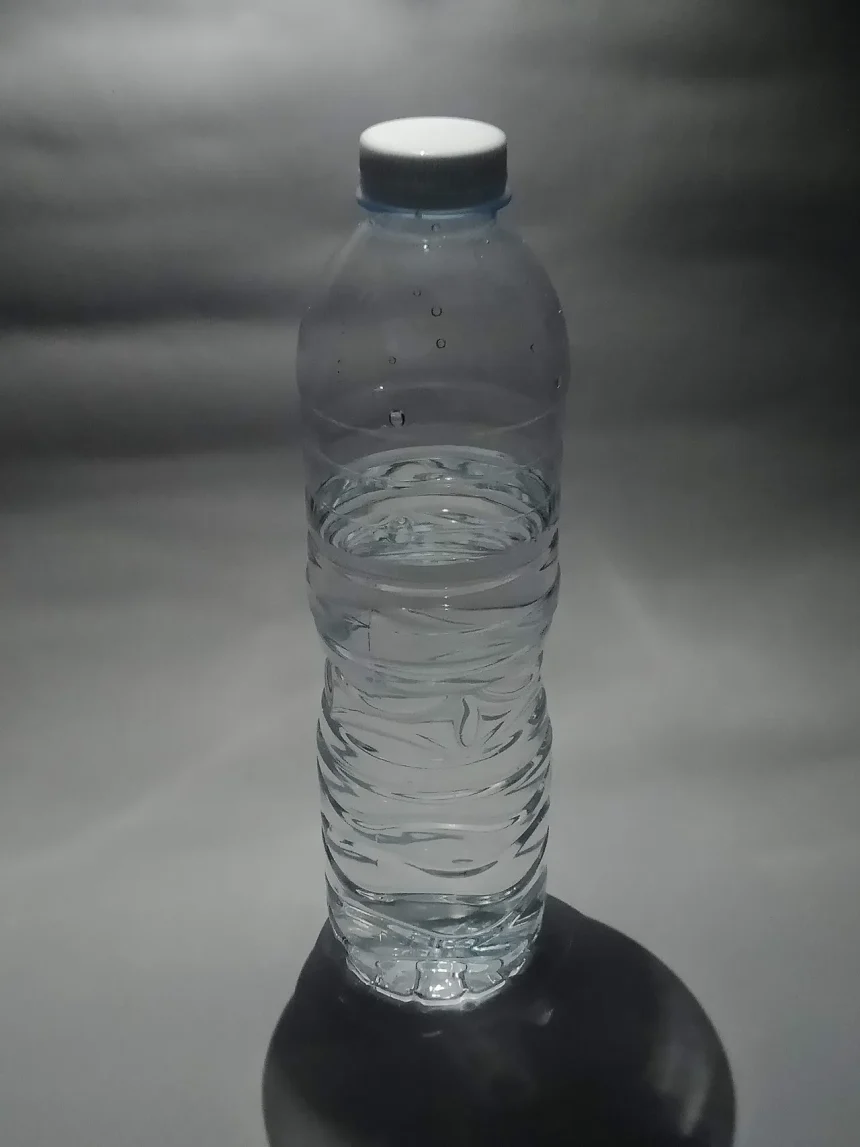
There is an irony at the centre of the modern water aisle. Many shoppers reach for bottled water because it feels cleaner than the tap — and researchers keep finding tiny plastic particles in the bottled product itself. A survey of 15,000 people across 81 countries found that this knowledge, now widespread, has barely dented consumption. To understand why, it helps to separate what the science of microplastics has actually established from what it is still struggling to measure.
As our health coverage has reported, microplastics are fragments and fibres shed as plastic breaks down, and the smallest of them — nanoplastics — can be far more numerous than early studies suggested. The particles in a bottle can come from the bottle wall, the cap, and the bottling process itself.
What researchers can measure, and what they cannot
Detection is a young science. Different laboratories use different instruments, count different size ranges, and report in different units, which makes headline numbers hard to compare. A study that counts particles down to a micrometre will always find more than one that stops at twenty. That does not make the findings wrong; it makes the field’s basic ruler a work in progress.
The harder question is biological. Finding particles in water is one step; proving what they do inside a human body over decades is another entirely. Toxicologists can show effects in cell cultures and animals at certain doses, but translating those exposures to a person drinking a litre a day is a chain of assumptions that honest researchers are quick to flag. The World Health Organization drinking-water fact sheet has called for more research while noting that robust evidence of harm at typical exposure levels remains limited.
Why the bottle is not a plastic-free refuge
The particles do not only come from the environment the water was drawn from. Polyethylene terephthalate — PET, the plastic of most single-use bottles — sheds fragments, especially when bottles are squeezed, stored warm, reused, or exposed to sunlight. Caps contribute too: the twisting action that opens a bottle can shave microscopic debris into the first mouthful.
None of this means tap water is particle-free; distribution pipes, airborne dust and household plumbing all contribute there as well. It means the choice is not between plastic and no plastic, but between two managed risks, one of which arrives with a marketing department and the other with a published testing regime, as the US EPA ground water and drinking water resources describe for regulated supplies.
Why knowing has not changed buying
The 81-country survey is, in a way, a study of this gap between measurement and behaviour. People told researchers they were aware of microplastics, and then described the reasons they keep buying: taste, convenience, habit, and doubts about their local tap. A risk that is invisible, long-term and scientifically unsettled competes poorly against a drink that is cold, sealed and in your hand right now.
Behavioural scientists would recognise the pattern. Uncertain future harms are heavily discounted; immediate sensory experiences are not. Until the uncertain science firms up — in either direction — most households will keep making the choice that feels controlled, even if researchers can show the control is partly an illusion.
Where the science goes next
The field’s priorities are clear: standardised counting methods so studies can be compared, better detection of the nano-sized fraction, and long-term exposure research that reflects real diets rather than laboratory extremes. Regulation tends to follow measurement, so the standards work matters beyond the academy.
Practical perspective for the everyday drinker
For readers wondering what to do with all this on a weekday, specialists tend to offer proportionate rather than dramatic advice. Do not store bottled water in heat or sunlight, and do not keep refilling single-use bottles long past their intended life, since warmth and wear increase shedding. Where you trust your tap supply, drinking it — filtered if you prefer the taste — removes the packaging pathway from the equation altogether. Where you do not trust it, that distrust is itself worth acting on through your supplier’s published results and your building’s plumbing, rather than assuming the bottle settles the question. And keep the topic in perspective within a whole diet and environment: bottled water is one source of microplastic exposure among many, notable less for its uniqueness than for the irony that its plastic comes from the product itself.
For now, the most accurate summary is an unsatisfying one: plastic particles are in bottled water, they are in much else besides, and science cannot yet say precisely what that means for a lifetime of drinking. The bottle’s promise of purity, though, is one claim the evidence has already revised. More health science reporting is available via our homepage.