

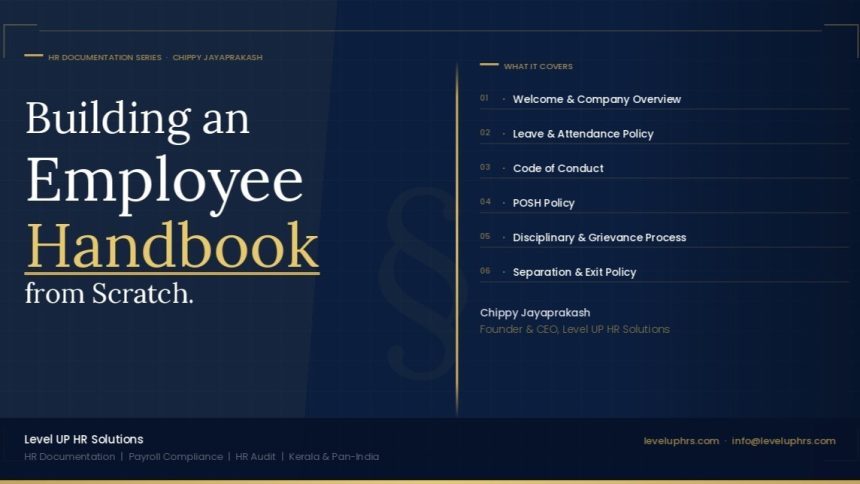
An employee handbook is one of the most important documents in any organization. It serves as a foundation for workplace expectations, company policies, cultural values, and operational guidelines. When written correctly, it reduces confusion, improves consistency, and protects both the company and its employees.
Despite its importance, many startups and small businesses either delay creating an employee handbook or rely on incomplete templates that do not reflect their actual operations. This often leads to misunderstandings, inconsistent management decisions, and avoidable workplace conflicts.
In today’s global and fast-moving business environment, especially for entrepreneurs who plan to start an e-commerce company in Hong Kong, having a structured employee handbook becomes even more critical. E-commerce teams often operate across borders, time zones, and digital platforms, which makes clear documentation essential for alignment and scalability.
This guide explains how to create an employee handbook from scratch in a practical, structured, and business-focused way.
Understanding the Purpose of an Employee Handbook
An employee handbook is not just a document filled with rules. It is a communication tool that defines how a company operates and what it expects from its employees.
It outlines workplace policies, defines behavioral expectations, clarifies roles and responsibilities, and communicates company culture.
A well-designed handbook reduces ambiguity. Employees know what is expected of them, and managers have a consistent reference point for decision-making.
In essence, it creates structure within the organization and ensures that everyone operates under the same guidelines.
Why Every Business Needs an Employee Handbook
Many small businesses assume that employee handbooks are only necessary for large corporations. This is a misconception.
Even small teams benefit from clear documentation because it prevents miscommunication and ensures consistency.
As a business grows, informal communication becomes less effective. What worked for a team of three may not work for a team of twenty or fifty.
An employee handbook scales communication and ensures that new hires integrate smoothly into the organization.
It also provides legal and operational protection by clearly outlining policies and expectations.
Starting With Company Vision and Values
The first section of an employee handbook should explain the company’s vision, mission, and core values.
This section sets the tone for everything else in the document. It helps employees understand the purpose of the organization and what it stands for.
Values are especially important because they guide behavior and decision-making.
When employees understand the company’s values, they are more likely to align their actions with organizational goals.
This creates a unified culture across the entire workforce.
Defining Employment Policies Clearly
Employment policies form the backbone of any employee handbook. These policies cover essential areas such as working hours, attendance, leave policies, and general workplace behavior.
Clarity is critical in this section. Employees should have no confusion about what is expected in terms of daily work structure and responsibilities.
Ambiguity in policies often leads to misunderstandings and inconsistency in enforcement.
Well-defined policies create fairness and transparency across the organization.
Code of Conduct and Workplace Behavior
The code of conduct outlines acceptable and unacceptable behavior within the workplace.
It covers professional behavior, communication standards, conflict resolution, and ethical guidelines.
This section ensures that employees understand how to interact with colleagues, customers, and stakeholders.
A strong code of conduct helps maintain a respectful and productive work environment.
It also protects the company from internal conflicts and reputational risks.
Compensation and Benefits Structure
Employees need clarity about how they are compensated and what benefits they receive.
This section should explain salary structure, payment schedules, bonuses, and any additional benefits offered by the company.
Transparency in compensation builds trust and reduces uncertainty.
Even startups that are in early stages of growth should clearly define how compensation evolves over time.
A well-structured compensation section helps attract and retain talent.
Performance Expectations and Evaluation
An employee handbook should clearly define how performance is measured and evaluated.
This includes outlining key performance indicators, review cycles, and feedback processes.
Employees should understand how success is measured in their role and how they can improve over time.
Clear performance expectations improve accountability and motivation.
They also help managers provide consistent and fair evaluations.
Workplace Communication Guidelines
Communication is one of the most important aspects of any organization.
An employee handbook should define how communication happens within the company, including preferred tools, response expectations, and escalation processes.
This is especially important in remote or hybrid work environments.
Clear communication guidelines reduce misunderstandings and improve efficiency.
They also ensure that information flows smoothly across teams.
Remote Work and Digital Operations
Modern businesses increasingly rely on remote teams and digital workflows.
For entrepreneurs who plan to start an e-commerce company in Hong Kong, remote operations are often a natural part of the business model due to global suppliers, international customers, and distributed teams.
In such cases, the employee handbook must include clear guidelines on remote work expectations, availability, data security, and digital collaboration tools.
Hong Kong is a major global business hub where many e-commerce companies operate internationally, requiring structured digital operations.
The Hong Kong Companies Registry provides the legal framework for companies that operate in such environments, supporting structured governance and compliance.
A strong handbook ensures that remote teams remain aligned despite physical distance.
Leave Policies and Time Management
Leave policies are a critical part of any employee handbook.
They define how employees request time off, how leave is approved, and what types of leave are available.
This includes vacation leave, sick leave, and other special leave categories.
Clear leave policies prevent confusion and ensure fairness across the organization.
They also help businesses manage workforce planning effectively.
Health, Safety, and Workplace Wellbeing
Even in digital or office-based companies, employee wellbeing is essential.
An employee handbook should include guidelines on workplace safety, mental health support, and general wellbeing practices.
Healthy employees are more productive and engaged.
Companies that prioritize wellbeing often experience lower turnover and higher performance.
This section demonstrates that the organization values its people beyond productivity.
Disciplinary Actions and Conflict Resolution
Every organization needs a clear process for handling misconduct or performance issues.
This section should outline how disciplinary actions are managed and how conflicts are resolved.
The goal is not punishment but fairness and improvement.
Employees should understand the steps involved and what behaviors may lead to disciplinary measures.
Clear processes reduce ambiguity and protect both employees and management.
Data Protection and Confidentiality
In modern business environments, data protection is critical.
Employee handbooks should clearly define how company data, customer information, and internal documents must be handled.
This is especially important for e-commerce businesses dealing with international customers and suppliers.
Confidentiality policies protect the business from legal and operational risks.
They also build trust with customers and partners.
Onboarding and Training Processes
A strong employee handbook should also explain how new employees are onboarded and trained.
This includes orientation processes, training programs, and integration into the company culture.
Proper onboarding ensures that new hires become productive faster and understand company expectations clearly.
It also reduces early-stage confusion and improves retention.
Adapting the Handbook as the Company Grows
An employee handbook is not a static document. It must evolve as the company grows and changes.
Policies that work for a small team may not be suitable for a larger organization.
Regular updates ensure that the handbook remains relevant and effective.
Companies should review their handbook periodically to reflect operational, legal, and cultural changes.
Conclusion
Creating an employee handbook from scratch is one of the most important steps in building a structured and scalable business. It defines how the organization operates, communicates expectations, and builds a strong foundation for company culture.
For entrepreneurs who plan to start an e-commerce company in Hong Kong, an employee handbook becomes even more important due to the global and digital nature of operations. Clear documentation ensures alignment across distributed teams and supports long-term growth.
Ultimately, a strong employee handbook is not just a document. It is a framework for consistency, clarity, and organizational success.
FAQs
What is an employee handbook?
It is a document that outlines company policies, expectations, and workplace guidelines.
Why is an employee handbook important?
It provides clarity, improves consistency, and helps prevent misunderstandings in the workplace.
How long should an employee handbook be?
It should be detailed enough to cover key policies but clear and structured for easy understanding.
Do small businesses need an employee handbook?
Yes, even small businesses benefit from clear documentation and structured policies.
Does business structure affect employee handbooks?
Yes, for example, companies that start an e-commerce company in Hong Kong often operate globally, requiring clear and structured policies.
How often should an employee handbook be updated?
It should be reviewed regularly and updated whenever company policies or operations change.
What is the most important part of an employee handbook?
Clear policies, communication guidelines, and performance expectations are among the most important sections.
You should also read: TechAiTech