

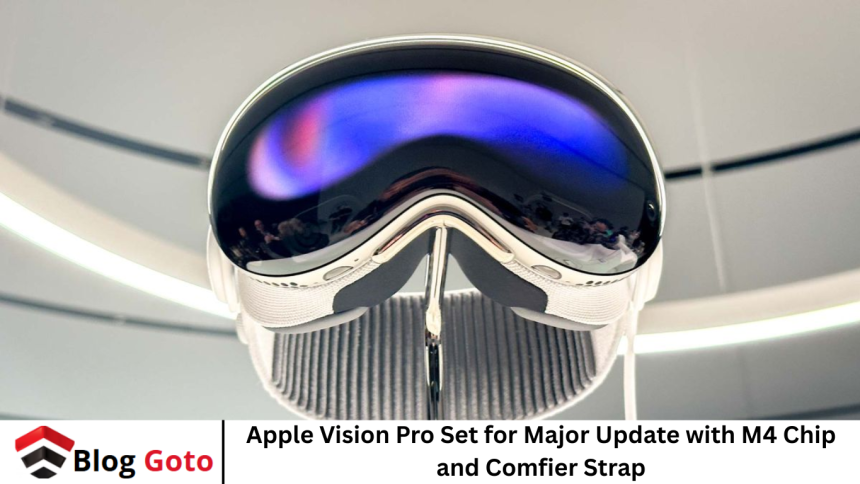
Apple’s revolutionary mixed-reality headset, the Vision Pro, is already one of the most advanced pieces of consumer technology. But now, a new report suggests that Apple is preparing the device’s first major hardware refresh, and it’s shaping up to be a game-changer.
This upgrade aims to resolve some of the early critiques of the Vision Pro: processing efficiency and wearability. As Apple continues to double down on spatial computing, the introduction of the M4 chip and the redesigned strap signals a serious commitment to refining both performance and user experience.
In this 3000-word deep dive, we’ll explore what we know so far about the upcoming Vision Pro update, how the M4 chip might supercharge its capabilities, why comfort is now a top priority, and what this means for the future of Apple’s mixed reality strategy.
More Read: Amazon Kindles Hit Record-Low Prices for Prime Day
The Vision Pro: A Quick Recap
When the Apple Vision Pro was announced in June 2023 and launched in early 2024, it was Apple’s most ambitious product in years. Merging augmented reality (AR) with virtual reality (VR), the device was pitched as a “spatial computer.” Key highlights included:
- Dual 4K micro-OLED displays
- Eye and hand tracking
- A unique gesture-based control system
- The M2 chip paired with a custom R1 chip for sensor data processing
- Spatial audio and FaceTime personas
- A hefty $3,499 price tag
While the Vision Pro dazzled early adopters with its capabilities, battery life, weight, and long-term comfort were common critiques. Apple has reportedly taken that feedback to heart—and is now preparing to address them.
M4 Chip: A Leap in Performance
The biggest headline in the upcoming update is the shift to Apple’s M4 chip, which made its debut earlier in 2025 in the new iPad Pro and MacBook Air.
Why the M4 Chip Matters
The M4 chip represents Apple’s fourth-generation custom silicon, designed to deliver exceptional performance and energy efficiency. Key improvements include:
- 3-nanometer architecture, improving processing density
- Enhanced AI and machine learning capabilities
- Improved graphics rendering, especially important for immersive AR/VR environments
- Lower power consumption = longer battery life
When integrated into the Vision Pro, the M4 chip could significantly boost:
- Visual fidelity and smoother refresh rates
- Multi-app performance, making it easier to run multiple spatial apps at once
- Real-time rendering, key for immersive environments
- AI features, including real-time environment mapping and object recognition
For developers, this also opens the door to richer apps and new immersive experiences that weren’t possible before due to the hardware limitations of the original M2 chip.
Comfort Redesign: The New Strap System
While tech specs matter, comfort is king when it comes to wearables—especially a headset as hefty as the Vision Pro. Early adopters often reported discomfort after extended use, particularly due to:
- The front-heavy design
- Tight pressure on the back of the head
- A general feeling of fatigue after an hour or two of wear
What’s New in the Updated Strap
According to leaked insider reports:
- Lighter materials are being used in the revised strap
- A new counterbalance system may help redistribute the device’s weight more evenly
- The strap could feature modular padding for customized comfort
- Enhanced ventilation and sweat control features may be included
- A possible over-the-head strap option for extra support
This redesign could dramatically improve the usability of the Vision Pro for longer sessions—whether for work, gaming, or entertainment.
Focus on Battery and Efficiency
With the M4 chip’s power-saving features, battery life could also see meaningful gains. The current Vision Pro offers only around 2–2.5 hours of continuous use per charge using an external battery pack.
Apple may introduce:
- A new battery pack design with greater capacity
- Optional swappable batteries for all-day use
- Fast charging support through USB-C
These additions would further enhance the Vision Pro’s appeal for professional users, particularly in creative industries and remote collaboration.
New Software and visionOS Features
Alongside the hardware, the next-generation Vision Pro is expected to debut with visionOS 2, Apple’s next major update to the spatial computing operating system.
Potential visionOS 2 Enhancements:
- Improved app multitasking
- Smarter hand and eye tracking
- Expanded FaceTime and conferencing tools
- Pro Mode for developers and designers
- More immersive spatial video tools and editing features
- Deeper integration with the Apple ecosystem, including seamless transitions between iPhone, iPad, and Vision Pro
This could transform Vision Pro into a productivity-first spatial computer, not just a cool gadget for entertainment.
Who Is the Update For?
- While Apple may not slash the price drastically, it’s expected that the next version of the Vision Pro could come in two tiers:
- Standard Model with M4 Chip and upgraded strap (potentially priced similarly to the current $3,499)
- Pro Model with extended battery life, additional ports, or extra features for developers and power users
- Apple could also keep the original Vision Pro on sale at a lower price to appeal to more entry-level users.
What This Means for Apple’s AR/VR Strategy
Apple’s move to upgrade the Vision Pro so soon signals long-term commitment to spatial computing. The M4 chip’s AI capabilities align well with the broader trend of Apple baking AI into all its devices.
Here’s what we might expect next:
- Future Apple Glasses may borrow design ideas from the new Vision Pro
- Developers could gain powerful AR toolkits for building immersive applications
- Apple could move to integrate health features like posture detection or eye strain monitoring into future headsets
- The Vision Pro isn’t just a headset—it’s a new computing platform. And Apple’s latest update solidifies its investment in making it mainstream.
Timeline and Release Date
- There’s no official word yet from Apple, but reports indicate:
- The new Vision Pro could debut in early 2026, possibly at the Spring Event or WWDC 2026
- visionOS 2 will likely be previewed in late 2025, with developer beta access shortly after
- Pre-orders for the updated device could open by mid-2026
That timeline would allow Apple to build on the current model’s success while addressing user feedback and preparing for global expansion.
Frequently Asked Question
What are the biggest changes in the updated Apple Vision Pro?
The two biggest upgrades are the integration of the M4 chip for improved performance and battery efficiency, and a redesigned strap for enhanced comfort. There may also be software upgrades, better battery packs, and potential tiered pricing options.
Will the new Vision Pro be backward compatible with older accessories?
It’s likely. Apple typically ensures continuity with existing accessories. However, the new strap design may not work with the original modular options. Battery packs and chargers will likely remain compatible.
How much will the updated Vision Pro cost?
Apple hasn’t confirmed pricing, but experts expect it to stay near the current $3,499 level. However, a more affordable model or lower-cost Vision device may launch alongside it, based on Apple’s reported internal roadmap.
When will the updated Vision Pro be released?
Leaks and reports point to a 2026 launch, with a possible announcement at WWDC or a dedicated spring event. Software updates like visionOS 2 could arrive earlier for developers.
Will I be able to upgrade my current Vision Pro with the new strap?
That depends on whether Apple sells the new strap separately and if it’s compatible with the current unit. If the attachment points remain the same, it might be possible. We’ll know more once official specs are announced.
How much better is the M4 chip compared to the M2 in the Vision Pro?
The M4 offers up to 50% faster processing, vastly improved machine learning performance, and better energy efficiency. In the Vision Pro, that could mean smoother performance, longer battery life, and more immersive apps.
Will Apple introduce a cheaper Vision headset?
Yes, Apple is rumored to be working on a lower-cost headset to appeal to more consumers. It may remove features like the EyeSight display or offer a simpler design but still support visionOS. This could be released alongside or shortly after the M4 model.
Conclusion
Apple’s decision to upgrade the Vision Pro with the M4 chip and reengineered comfort highlights its serious investment in spatial computing. This isn’t just an iterative refresh—it’s a signal that the company is committed to making mixed reality mainstream. The performance leap with the M4, paired with meaningful ergonomic improvements, could make the Vision Pro much more usable for longer sessions and professional work. For developers, creatives, and even curious early adopters, the upcoming Vision Pro update could be the version that makes Apple’s spatial computing vision a truly compelling everyday experience.