

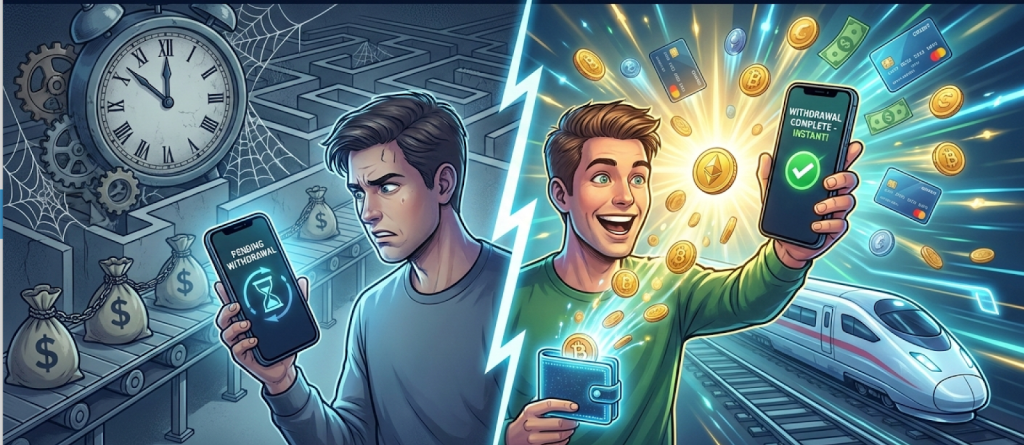
We’ve all been there. You click “Submit,” and the screen freezes. Two seconds pass. Five. Ten. By fifteen seconds, you’re already reaching for the back button. That’s not impatience—that’s modern user psychology at work.
The concept researchers call “temporal perception” has fundamentally shifted in the digital age. What our parents tolerated—waiting days for a letter, hours for a phone call to connect—we now consider unacceptable in milliseconds. This isn’t entitlement. It’s adaptation to an ecosystem that trained us to expect instant responses.
The Science Behind Our Shrinking Patience
Neuroscience reveals why waiting feels worse online than in physical spaces. When we interact with digital interfaces, our brains enter a state of heightened expectation. We’re primed for immediate feedback because that’s what decades of technological advancement conditioned us to receive.
Research from Google’s RAIL model demonstrates that users perceive delays differently based on context. Visual response needs to occur within 100 milliseconds to feel instantaneous. Interactions like button clicks demand feedback within 50 milliseconds. Beyond one second, users begin experiencing that familiar sense of disconnect—the feeling that something went wrong.
This isn’t about technical specifications. It’s about trust. When a system responds immediately, users feel in control. When it hesitates, doubt creeps in. Did my payment go through? Is this site legitimate? Should I try again or wait?
Where Speed Matters Most: Financial Transactions
Nowhere is this psychological dynamic more critical than when money changes hands. Payment processing delays trigger a unique form of anxiety that combines financial concern with technical uncertainty. Every second of waiting amplifies doubt about whether the transaction completed successfully.
This principle applies universally across financial services, but it’s particularly visible in industries where users expect immediate gratification. Online gaming in Canada provides a telling example. Players who’ve just won want access to their funds without bureaucratic delays. The market responded: platforms that once required 3-5 day withdrawal processing now compete on speed, with some offering same-day or even hourly payouts through modern payment rails.
Canadian players increasingly prioritize withdrawal speed when choosing platforms, specifically seeking out the best online casino Canada fast payout options because fast processing signals operational reliability. The fastest operators now complete crypto withdrawals in under an hour and e-wallet transfers within hours rather than days. Traditional banking methods still lag at 1-3 business days, but even that represents dramatic improvement from previous industry norms.
What makes this evolution instructive for other sectors is how speed became a quality signal. Fast payouts suggest robust verification systems, reliable payment partnerships, and customer-first priorities. Slow payouts suggest the opposite—legacy infrastructure, outdated processes, or misaligned incentives. Users learned to interpret processing speed as a proxy for overall platform quality.
Beyond Gaming: Universal Speed Expectations
The financial services lesson extends across digital products. E-commerce giants learned this expensive way when Amazon’s research revealed that every 100 milliseconds of latency cost them 1% in sales. That finding fundamentally reshaped how online retailers approach checkout flows, prioritizing perceived speed through progress indicators and confirmation messages while backend processes complete invisibly.
Banking apps demonstrate the same principle. Services that show instant balance updates feel more reliable than those with delays, even when backend reconciliation takes identical time. Streaming platforms that buffer content instantaneously feel higher quality than those with loading screens. Ride-sharing apps that show driver locations in real-time feel more trustworthy than those with delayed updates.
Building for the Impatient Future
The lesson for digital product designers is clear: optimize for perceived speed first, actual speed second. Users care more about feeling progress than measuring it scientifically. Progress indicators, skeleton screens, and optimistic UI patterns can make slower processes feel faster.
But there’s a limit to perception engineering. Eventually, actual performance matters. As users become sophisticated, they distinguish between cosmetic speed improvements and genuine system responsiveness. The companies winning in competitive markets deliver both—interfaces that feel instant backed by infrastructure that actually is instant.
The Competitive Advantage of Speed
Speed isn’t just a feature anymore. It’s a statement about how much you value user time. In attention economy where every app competes for the same finite resource, respecting that time isn’t optional—it’s existential.
Industries that recognized this early gained disproportionate advantages. Those still operating on legacy timelines risk becoming obsolete as users migrate toward faster alternatives. Whether you’re processing payments, loading content, or confirming transactions, the question isn’t whether speed matters—it’s whether you’re fast enough to compete.
The future belongs to services that treat responsiveness not as a technical metric but as a core user experience promise. Because in the end, waiting isn’t just frustrating—it’s a competitive vulnerability.