

Dr. Anthony Fauci cautioned early in the pandemic, “You don’t make the timeline, the virus makes the timeline.” His words still resonate as the crisis stretches on without a clear end.
Despite lingering uncertainty, countries and communities worldwide are moving forward, reopening businesses, schools, and institutions. Guidance keeps evolving: just days ago, Fauci supported fall school reopenings in parts of the U.S., noting safety Worldwide depends on local conditions. Rural Montana classrooms may look very different from those in New York City, and some schools may remain closed.
To understand this “new normal,” we reviewed global news and connected with educators on social media. Over 600 teachers from 50+ countries shared experiences, with 20 offering in-depth interviews. Their insights provide a revealing snapshot of school reopenings worldwide.
The Big Picture: Schools Reopening with Optimism
Many educators worry about potential outbreaks, but most teachers report joy in returning to classrooms and students feel the same.
In the Netherlands, primary school leader Laura Landers says children arrive “with gigantic smiles,” thrilled to see friends and teachers again. In China, biology teacher Christopher Noordhoek noted that students battling anxiety and depression during lockdown now find renewed stability, routine, and peer support.
The transition isn’t flawless. Teachers describe exhaustion, anxiety, and a steep learning curve with remote tools, and some believe reopening came too soon. Yet, the consensus is clear: students are learning effectively, in-person classes remain worthwhile, and technology despite challenges is enriching teaching worldwide.
Read More: Implementing Standards-Based Grading in a Traditional School
Alternate Day Attendance: The New Normal
Managing social distancing in schools is complex. Teachers admit rules often break down when too many students move at once children crowd exits, forget protocols, or, as one New Zealand teacher noted, teenagers simply ignore distancing in favor of hugs.
To ease overcrowding, many schools worldwide in Greece, the Netherlands, Germany, Singapore, Canada, Cyprus, and beyond adopt alternate day schedules. In the Netherlands, for example, half the class attends in person on Mondays and Tuesdays while the other half learns remotely, then they swap. Wednesdays are reserved for online learning, deep cleaning, support for high-needs students, and teacher planning.
Other countries have adapted the model: Denmark holds lessons outdoors, Singapore rotates groups weekly, and some U.S. states, like Indiana, offer blended schedules. Australia even staggered grades, bringing them back on different days. Though some schools tried morning and afternoon shifts, most educators agree alternate days remain the simplest, most effective solution.
Strong Technology Is Essential for School Reopening
Reopening schools without online learning has proven nearly impossible. Across the globe, health risks, family choices, and travel restrictions continue to drive the need for digital tools.
In Canada, medically fragile students rely on remote support. In the Netherlands, half of families chose distance learning over returning to classrooms a trend also seen in New Zealand, Germany, and Israel. Vulnerable teachers in several countries stayed home, teaching via Zoom while aides supervised students. In China, some educators resorted to remote lessons after border closures left them stranded.
Technology now supports more than instruction. Staff meetings and assemblies happen virtually, classrooms adopt flipped and blended models, and in Greece, teachers even hosted successful online debate tournaments.
Most importantly, strong tech infrastructure ensures continuity when outbreaks force closures, as seen in France, Israel, and South Korea. It also enables remediation and extended learning, critical for recovering from pandemic-related learning loss.
Watch for Teacher Burnout in Hybrid Learning
Treating hybrid teaching as a short-term fix often leads to teacher burnout. Many educators worldwide told us they struggle to balance in-person and online instruction. As Charlotte Holmes, a teacher near Adelaide, Australia, explained, “Face-to-face teaching hasn’t changed, but we’ve added online content, which has increased workload.” Without systems to reduce this strain, hybrid models risk long-term failure.
Some schools are experimenting with solutions. In Luxembourg, teacher Emily Lewis Agraz posts weekly lessons online, then runs virtual and in-person sessions simultaneously, though she admits it lacks the energy of traditional classes. In Germany, Michelle Kaszuba alternates sometimes teaching both groups together, other times focusing on in-person students while remote learners work independently, then switching roles the next day.
In the Netherlands, school leader Laura Landers emphasizes more independent work and recruits non-teaching staff to support online learning. Other schools reassign faculty from classes like band or theater to ease pressure.
Protective barriers, flexible scheduling, and shared responsibilities are becoming common tactics worldwide—essential steps to sustain teachers and make hybrid education effective.
Yes, the Play Goes On
Teachers and parents worry about children losing outdoor playtime. “I would not want my young child sitting at a desk all day, no recess, no breaks,” wrote New York teacher Leah Dyan a sentiment echoed by hundreds of parents and educators.
Despite restrictions, play continues. In Busan, South Korea, students returned to full classrooms with desk-based activities like origami and quiet games. While helpful, most agree young children need more active outlets.
Around the world from Germany and Israel to Canada, New Zealand, and the Netherlands outdoor recess remains part of the day, with new safety measures. Teachers report staggered recess times, designated play zones, and post-recess handwashing. Equipment like slides and monkey bars stays open but is cleaned frequently.
Games involving close contact, such as tag, are discouraged, but children quickly adapt. In Israel, students invented “shadow tag,” chasing each other’s shadows instead of physical touch proof that even in a pandemic, play finds a way.
High Schools and Middle Schools Still in Motion
The CDC suggested limiting hallway use through staggered releases or homeroom stays but acknowledged such strategies may be difficult, especially in secondary schools.
In practice, middle and high school students in China, Germany, New Zealand, Luxembourg, and beyond are still changing classes. While it takes planning and staff oversight, teachers report it’s manageable. “It’s a team effort,” says Carol Wallace, a middle school principal in Norway. “The one-meter rule is the hardest for older students—they need constant reminders.”
To reduce crowding, schools mark hallways with arrows and taped lanes, restrict lockers, and station teachers at busy intersections. In Luxembourg, teacher Emily Lewis Agraz notes the added challenge of disinfecting desks between periods: “The combination requires some smooth moves.”
Changing Health and Safety Protocols in Schools
Health and safety rules in schools mask use, temperature checks, and testing continue to shift as communities move through different stages of the pandemic.
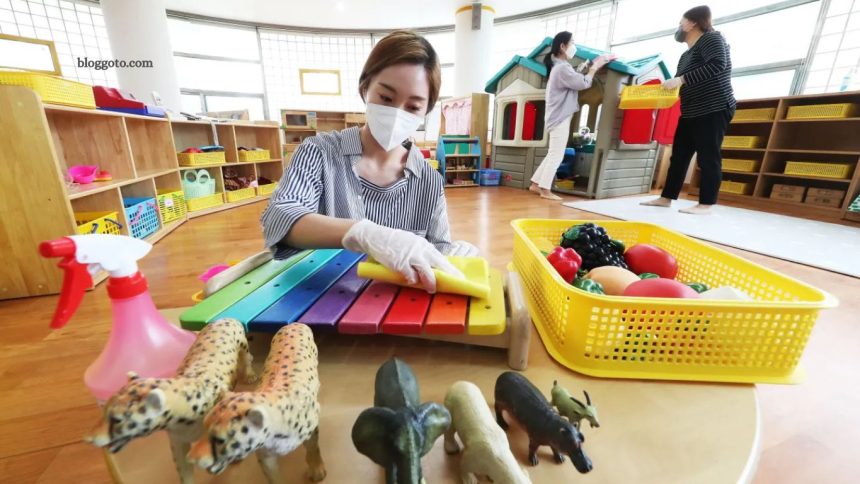
Frequent handwashing and cleaning remain global priorities. Many schools schedule handwashing five to ten times a day, alongside disinfecting desks, door handles, and classroom materials.
Masks spark mixed reactions. Teachers worry about breathing, clear communication, and the loss of smiles—especially in language classes. While many countries still require masks for students and staff, others, including Australia, Norway, New Zealand, and even parts of China, have relaxed standards as case numbers fall. The CDC continues to recommend masks but allows for exceptions in certain student groups.
Frequently Asked Questions
How are schools keeping students safe during reopening?
Schools worldwide are adopting strict safety protocols, including frequent handwashing, mask-wearing in some regions, staggered schedules, and enhanced cleaning of classrooms and high-touch surfaces.
What is alternate day school attendance?
Many schools reduce crowding by splitting classes into groups. One group attends in person while the other learns remotely, then they swap. Some countries also use outdoor lessons or staggered recess times.
How does hybrid learning affect teachers?
Hybrid models often increase teacher workload since they balance in-person and online instruction. Successful schools manage this by reassigning staff, reducing non-essential duties, and providing more planning support.
Are children still getting recess and playtime?
Yes, but with new rules. Playgrounds are cleaned frequently, contact games like tag are discouraged, and recess is often staggered. Children adapt quickly, even inventing new games like “shadow tag.”
What role does technology play in reopening schools?
Technology is essential for distance learning, staff meetings, and even online assemblies. Strong tech infrastructure ensures continuity when outbreaks force closures and supports blended learning approaches.
Do middle and high school students still change classes?
In many countries, yes. To reduce risk, schools use taped hallway lanes, arrows for traffic flow, limited locker use, and teacher supervision during transitions.
What are the biggest challenges teachers face right now?
The most common concerns include burnout from hybrid teaching, managing student health protocols, balancing remote and in-person learning, and addressing learning gaps caused by earlier school closures.
Conclusion
School reopening looks different around the world, but one truth is clear: flexibility is key. From alternate day schedules and hybrid learning to strict health protocols and creative recess solutions, educators are working tirelessly to keep students safe while ensuring learning continues. Technology, teamwork, and adaptability remain at the heart of this new era in education.